The Council of the European Union: Where National Interests Meet European Policy
The Council is one of the most important places where national governments negotiate what the European Union actually does.
POLITICSNEWS
12/24/20256 min read

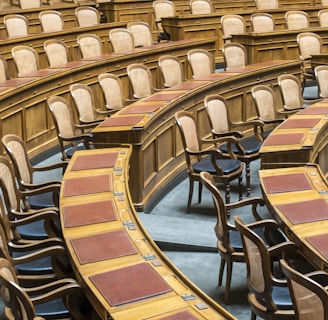
If you want to understand how the European Union actually works, there is one institution that is particularly difficult to ignore: the Council of the European Union. It does not have the same visibility as the European Parliament, whose members are directly elected by citizens, and it does not have the public profile of the European Commission. Nevertheless, the Council is at the centre of the EU's decision-making process. In most areas of EU policy, it acts together with the European Parliament as a co-legislator, meaning that both institutions have to agree on the legislation that eventually becomes European law.
What makes the Council particularly interesting, however, is not only what it does but also who sits around the table. The Council brings together ministers from the governments of the 27 Member States, with the composition changing depending on the subject being discussed. Finance ministers meet in the Economic and Financial Affairs Council, foreign ministers in the Foreign Affairs Council, and ministers responsible for employment and social policy meet in another configuration. This means that national politics is present inside the European decision-making process from the very beginning. A Spanish minister arrives with a position agreed at national level, just as a German, Polish or Irish minister does, and those positions do not necessarily coincide.
This is not a contradiction in the European system. The Council exists precisely because the Member States continue to have their own interests, political priorities and domestic constraints. The difficult part is what happens when those national positions have to be combined into a common European policy. A government may arrive in Brussels determined to defend a particular position, but that position will only become part of EU legislation if it can be reconciled with the positions of enough other governments and, in many cases, with the European Parliament. The Council is therefore not simply a place where national governments defend their interests. It is also a place where those interests have to become negotiable.
Much of the work happens before ministers arrive
It is easy to imagine European negotiations taking place mainly around the table when ministers meet in Brussels or Luxembourg. In reality, much of the work has already been done before they arrive. Legislative proposals are examined by the Council's preparatory bodies, particularly its working parties, where national experts discuss the technical details of the proposals. At a later stage, many files reach Coreper, the Committee of Permanent Representatives, which brings together the ambassadors of the Member States to the EU and their deputies. Coreper is the Council's main preparatory body and plays an important role in identifying disagreements and helping governments find compromises before a matter reaches ministers. (consilium.europa.eu)
Coreper does not formally adopt EU legislation; that responsibility remains with the Council itself. Its importance lies in the preparation that makes political decisions possible. By the time ministers discuss a particularly difficult proposal, many technical questions may already have been resolved, while the remaining disagreements have been narrowed down to the issues that require political decisions. This is one of the reasons why understanding the Council means looking beyond its formal meetings. The most visible part of the process is not necessarily where most of the negotiation takes place.
The Presidency and the search for agreement
The Council also has a feature that is unusual from a national perspective: its Presidency rotates between the Member States every six months. The country holding the Presidency chairs most Council meetings, helps organise the institution's work and represents the Council in negotiations with the European Parliament and the Commission. The Foreign Affairs Council is an exception, as it is chaired by the EU's High Representative for Foreign Affairs and Security Policy.
The Presidency can give a Member State an important role in shaping the way discussions are organised, but it does not mean that the country holding it can simply use the Council to promote its own national position. The Presidency is expected to act as an honest broker between Member States, helping discussions move towards an agreement. In practice, this can mean trying to reconcile governments that have very different priorities and making sure that negotiations continue even when there is no obvious solution.
There is consequently an interesting tension in the role of the Presidency. For six months, one Member State is responsible for coordinating much of the Council's work, but it can only perform that role effectively if it is able to move beyond its own immediate national interests and help the other governments reach common ground. Its influence therefore comes not only from setting the agenda or chairing meetings, but also from its ability to organise a negotiation in which different countries can accept a compromise.
When disagreement becomes a voting system
Of course, not every disagreement can be solved through compromise. Depending on the policy area, the Council can take decisions by qualified majority, unanimity or, in some cases, simple majority. Qualified majority voting is the normal procedure for most EU legislation.
Under the standard qualified majority system, a decision requires at least 55% of the Member States, currently 15 out of 27, representing at least 65% of the EU's population. This system reflects one of the fundamental difficulties of European decision-making: the EU is made up of sovereign Member States that are formally equal, but those countries represent very different numbers of citizens.
A system based entirely on population would give the largest Member States a dominant position, while a system in which every country had exactly the same voting weight would ignore the differences in population between Member States. Qualified majority voting attempts to find a balance between these two principles. It gives smaller countries a significant role while ensuring that decisions also have sufficient support among the EU's population.
The voting system is therefore another example of the compromises that run through the European institutional structure. The Council has to balance the interests of governments, but the rules under which those governments make decisions also have to balance the position of Member States with the population they represent.
From national positions to European legislation
The Council's role becomes particularly important when it acts as co-legislator with the European Parliament. Under the ordinary legislative procedure, the European Commission normally presents a proposal, after which the Parliament and the Council examine the text, propose amendments and negotiate until they reach an agreement. Neither institution can simply impose its preferred version of the legislation on the other.
The process can therefore involve several different stages before a final law is adopted. A Commission proposal may first be discussed by national experts in Council working parties, then examined by Coreper and eventually considered by ministers. At the same time, the European Parliament is working on its own position, usually through its committees and political groups. When the positions of the Council and Parliament differ, negotiations are needed to find a compromise that both institutions can accept.
This helps explain why European legislation can sometimes appear extremely technical when it is finally published. A regulation may contain dozens of detailed provisions on areas such as environmental standards, digital markets, workers' rights or industrial policy, but behind those provisions there may have been months of political negotiation between governments and EU institutions. What eventually appears as a single piece of European legislation is often the result of many different national interests being gradually brought together.
The Council as a reflection of the EU itself
The Council is perhaps best understood as a reflection of one of the central characteristics of the European Union. The EU brings together countries that have different economic structures, political traditions and strategic priorities, while asking them to develop common policies in an increasing number of areas. Those differences do not disappear simply because decisions are being taken at European level.
The purpose of the Council is not to eliminate those differences, but to provide a framework in which they can be negotiated. A Spanish government can defend its interests, just as a Polish or Swedish government can, but the final objective is to find a position that can work beyond the borders of any one Member State. In that sense, the Council is one of the clearest examples of how European integration works in practice: national governments remain national governments, but they have to cooperate within institutions designed to produce common decisions.
This also explains why EU decision-making can sometimes seem slower or more complicated than decision-making at national level. A European policy has to pass through several layers of negotiation, and the final result may not correspond perfectly to the original position of any one government. Yet that complexity is closely connected to the nature of the Union itself. The EU is not a single state with a single government, but neither is it simply an international organisation where countries cooperate only when their interests happen to coincide.
The Council occupies precisely that space between the national and the European levels. It gives Member States a direct role in European decision-making while requiring them to negotiate with one another and, in the legislative process, with the European Parliament. Understanding the Council therefore means understanding one of the fundamental questions of European integration: how can 27 countries with different interests make decisions together without losing their national identities?
There is no simple answer, and the Council does not always make the process look simple. But its everyday work is built around that challenge: turning disagreement between Member States into compromises that can eventually become common European policy.